
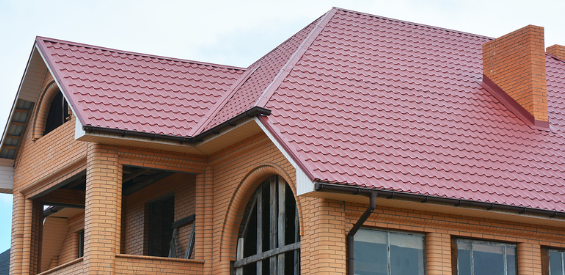
Anyone researching Roofing near Services meets the same vocabulary of decks, underlayment and flashing; the sections ahead walk through the stack from the bottom. A roof in the valley bakes for months, then gets soaked in a single afternoon; good decisions begin with knowing what each layer is for.
A Roof Is a Stack of Layers
Below the surface, a roof starts with a wooden skeleton of rafters, trusses and ties; roofers inspect the structure before trusting it with new weight. Panels of wood nailed across the rafters make the working floor of a roof; new covering is only as good as the wood beneath. Underlayment is the second line of defense, a sheet layer between the deck and the covering; a roof without a good sheet layer has a single point of failure. Wherever a slope hits a wall, a chimney or a pipe, a strip of metal stands guard; metal outlasts sealant, so good crews rely on metal first. The covering is the visible layer, whether shingles, panels, tile, wood or a membrane; the best coverings suit the roof shape and the weather together.
Decking and the Wood Beneath
Panel sheathing comes in sheets nailed across the rafters with small gaps for movement; each panel needs fasteners into the rafters on a steady pattern. Stains on the underside of the deck mark the places where water has been traveling; repairs mean cutting out the bad section and nailing in sound wood. Fasteners hold a deck and a covering in place, and the right pattern matters; consistent spacing is easy to see and easy to ask about.
Underlayment and Flashing: The Quiet Layers
Felt still works, and synthetic sheets have simply improved the margin of safety; crews can show a sample in the driveway. Where two slopes meet, water gathers and speeds up on its way down; a well-built valley passes a garden-hose test. Counterflashing sits in the wall and covers the base flashing like shingles on a miniature roof; ask whether counterflashing will be cut in or surface-mounted. Neoprene seals dry out under strong sun and let water follow the pipe down; ask whether the scope lists each vent by type.
Five Common Coverings and Their Habits
Layered asphalt sheets with a granule surface are the default choice on houses across the valley; heat and sun slowly wear the granules, so the surface thins with age. Steel and aluminum panels shed rain quickly and reflect a share of the summer sun; panel profile and gauge should be named in the scope. Tile roofing uses clay or concrete pieces that overlap like scales and last through harsh weather; foot traffic should be minimal after the roof is done. Wood roofs need airflow underneath so the pieces can dry between rains; the effort suits owners who love the look. Modified bitumen sheets are torched or adhered in overlapping layers for strong seams; ponding water signals a problem with slope or drainage.
Weather That Shapes Roofs in the Valley
Summer sun on a roof in the valley is intense and long, so ultraviolet exposure wears every surface; granule loss in the gutters is a visible sign of sun wear. A dark roof on a still afternoon can heat the attic to oven temperatures; reflective or light coverings take some of the strain off the attic. Damp air and shade give moss and lichen a start on roofs under trees; trimming back branches helps sunlight dry the surface. The same roof that bakes in summer has to withstand a violent spring afternoon; photos taken soon after a storm help every later conversation. Shifting ground shows up as cracks that look like leaks but are not always roof problems; not every ceiling stain comes from the roof.
Air Movement Under the Deck
Ventilation pulls cool air in low and pushes hot air out high; a quick look in the attic shows whether air is moving. Mold on the underside of the deck is a sign that air has stopped moving; bath fans and dryers should vent outside, not into the attic.
A Roof Is Built in Sequence
Stripping the roof is fast, noisy work that sets up the careful steps after it; nails scattered across the yard get swept with a magnet. The base layers go down in a precise order, from lowest edge to highest ridge; wrinkles and gaps in the sheet layer are visible and fixable. Fastening follows the manufacturer's pattern for the product being laid; ridge caps and hip pieces finish the top edges. The last task is to walk the property with the owner and talk through the work; any missed spots get fixed before the crew leaves.
How Pitch Chooses the Material
Flat roofs and low-slope roofs need membranes instead of overlapping courses; a slope that looks steep from the street is gentler than it seems. Additions built over time often leave a patchwork of slopes and seams; additions can hide old roof edges beneath the new ones.
Keeping the Whole System Healthy
Regular clearing is the simplest upkeep a roof can get; a quick look from the ground after heavy rain takes a minute. Membrane roofs need clear drains and a check for punctures and loose seams; binoculars from the yard reveal a lot.
Reading the Language of Roofing
The lowest line of a roof is the eave, and the highest line is the ridge; write unfamiliar terms in the margin and ask about them. Rows of covering step upward from the eave, each hiding the nails of the one below; the manufacturer's instructions set the right exposure for each product. Waste, cutting and extra pieces at valleys and ridges add to the material count; large differences in measured area between crews are worth a question.
Bring These to the Conversation
Ask which layers will be new and which will stay; the written list is the reference for the final walk. Request a description of how water is kept out of every joint; the edge of the roof deserves as much attention as the center. Request thoughts on ventilation, since a roof that cannot breathe wears out early; the best plans are written for one building at a time.
Questions About Your Roof Are Welcome
Phone 979-464-6655 to ask what each layer of the roof is doing; questions about weather, shade and upkeep are welcome.